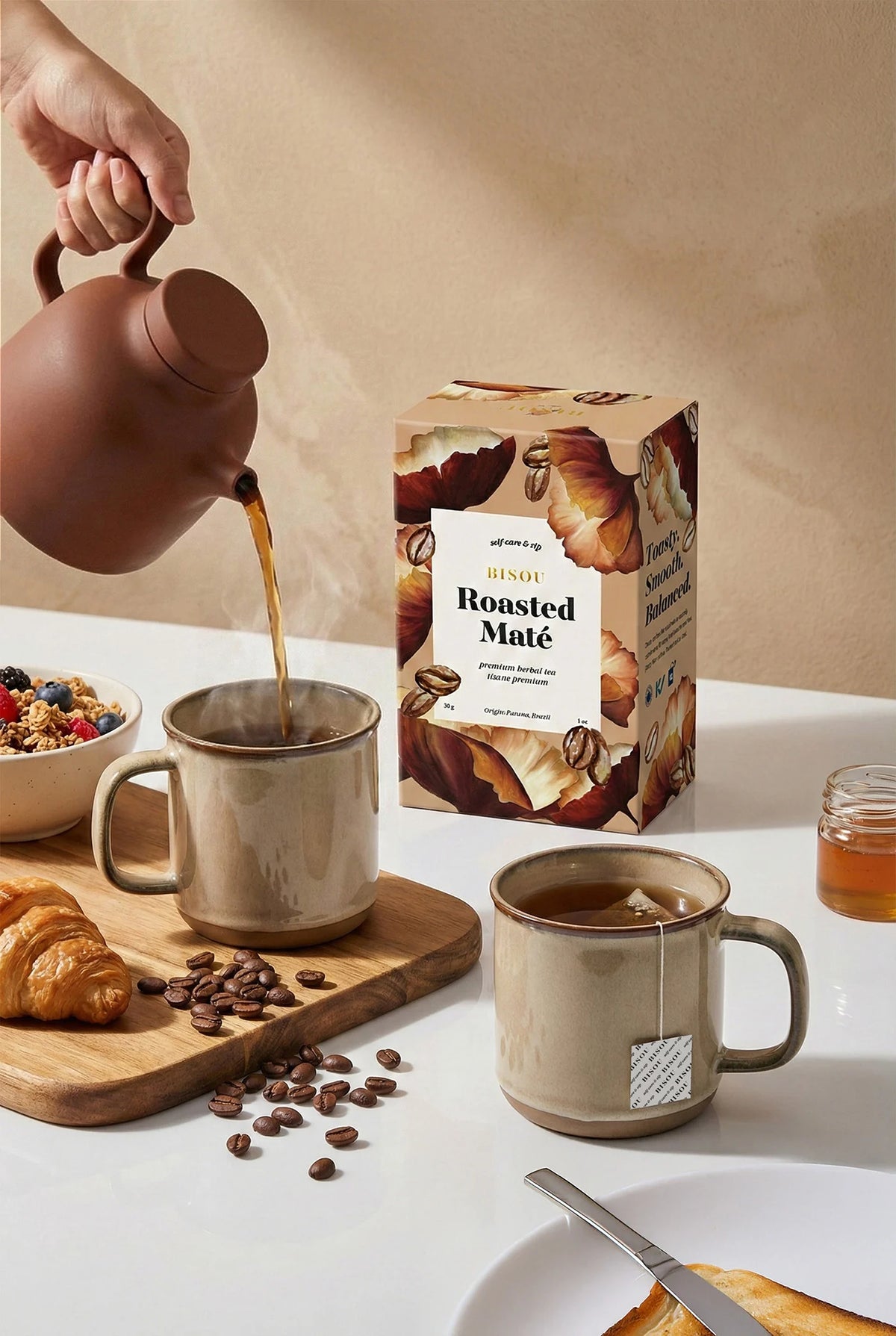
BISOU
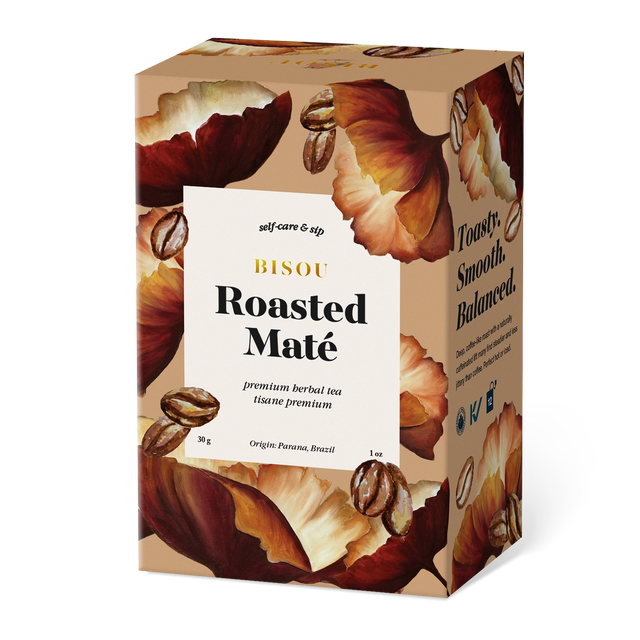
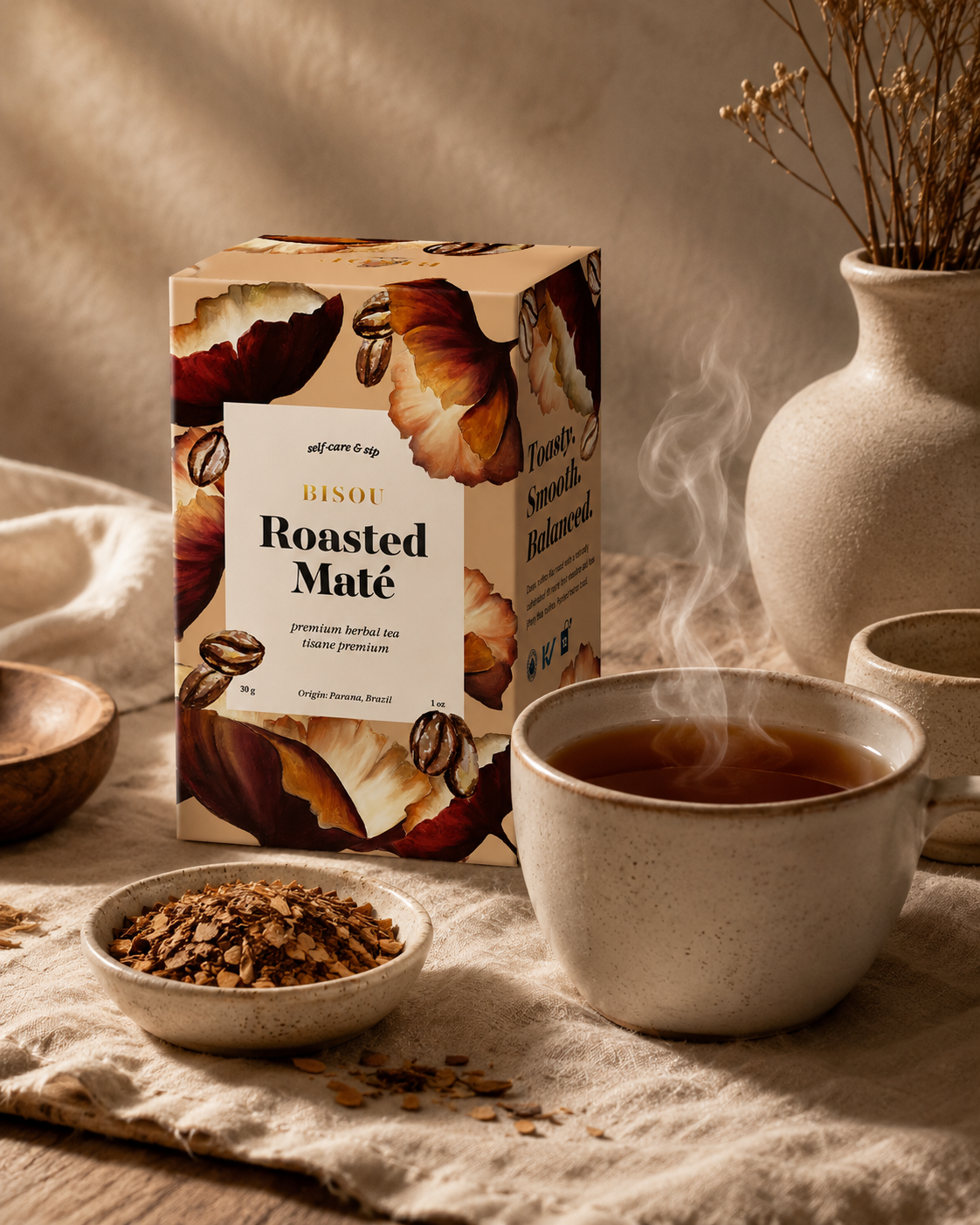
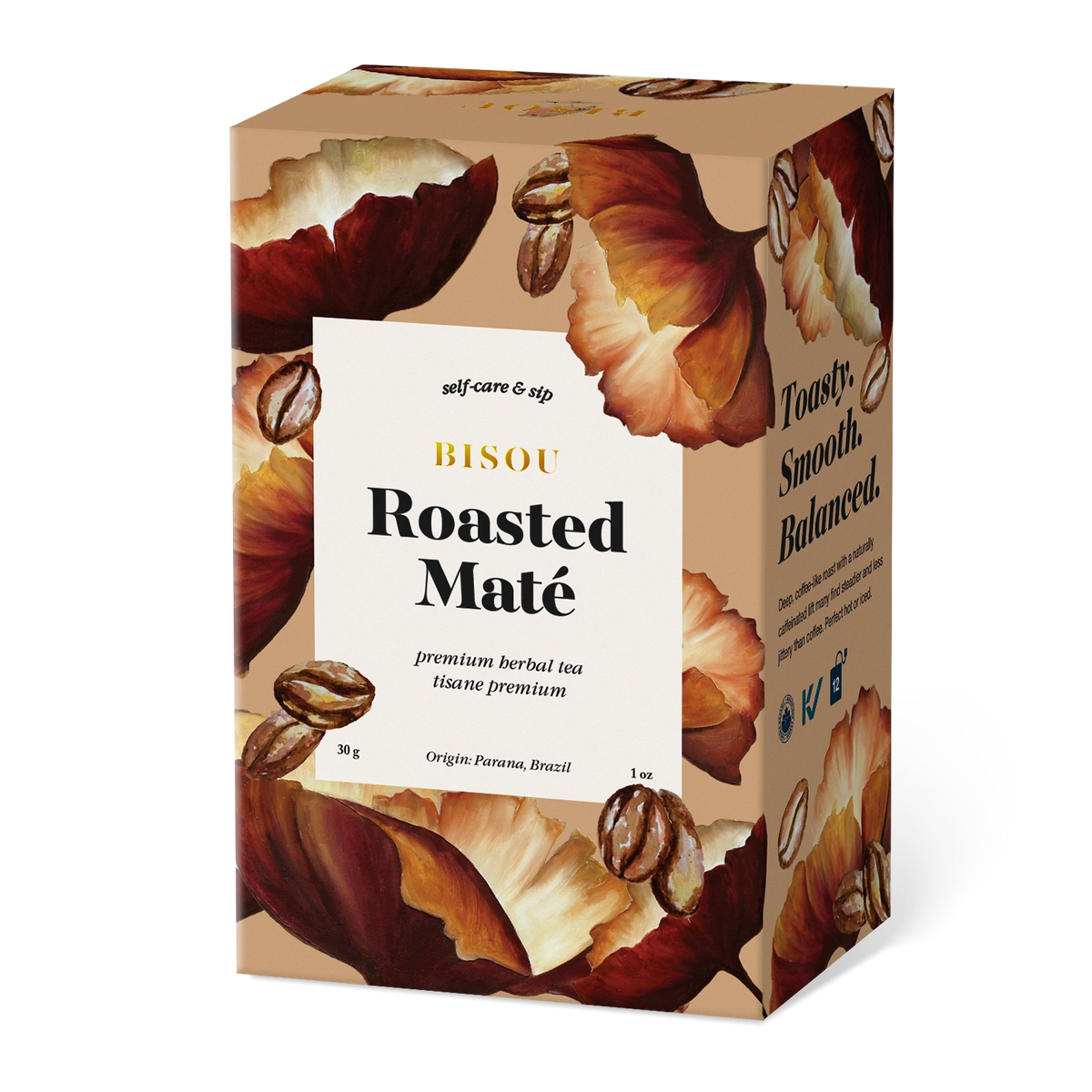
Roasted Maté
premium herbal tea / tisane premiumToasty.Smooth.Balanced.
$11.99CAD
Deep, coffee-like roast with a naturally caffeinated lift many find steadier and less jittery than coffee. Perfect hot or iced.
Water
95°C
Steep
3–5 min
Caffeine
Medium
Benefits & Functions
Boosts energyA deeply roasted maté offering smooth, coffee-like energy with a naturally caffeinated lift.
Enhances mental focusNaturally stimulating maté supports sustained focus and mental clarity throughout the day.
High in antioxidantsRich in antioxidants that help combat oxidative stress and support overall wellness.
Medium caffeine contentDelivers a balanced caffeine boost with smooth, steady energy.
Ingredients
Organic Certified Ingredients: Roasted Maté
The Sachet
Woven from 100% non-GMO sugar cane fibre. Plastic-free and compostable with your kitchen scraps.
Shipping & Returns
Free standard shipping across Canada on orders over $50. See our Shipping & Returns page for return details.
Recipe
Roasted Maté Latte
Ingredients
- 1 tea bag Roasted Mate
- ¼ cup steamed milk
- Sweeten to taste and enjoy
- Sprinkle cinnamon or vanilla for a warmer, café-style finish
Method
- 1Bring water to a boil and steep for 3-5 minutes.
- 2Add honey in while the tea is still hot then set it aside to cool.
- 3In a cup add ice and tea then mix together.
Origin
Paraná, Brazil
Toasty and smooth, from the forests of southern Brazil.
- Forest
- Araucaria
- Roast
- Deep
Erva-mate is native to the Araucaria forests of southern Brazil, and Paraná grows most of the country’s crop, often within native forest rather than cleared fields. Roasting turns the leaf deep and toasty, which is where this blend gets its smooth, coffee-like character and a naturally caffeinated lift.
The Guaraní were the first to drink maté, long before European contact, and Jesuit missions were the first to cultivate it rather than gather it wild. Brazil is now the world’s largest producer, and the herb remains a daily ritual across southern South America, drunk hot or iced.